

Yo! I'm a supplier of Narrow Edge Safety Sensors, and I'm super stoked to chat about how these bad boys work in ultrasonic environments. Let's dive right in!
First off, what's an ultrasonic environment? Well, it's a space where ultrasonic waves are being used. Ultrasonic waves are high - frequency sound waves that are above the range of human hearing. They're used in a bunch of different applications, like industrial automation, robotics, and even some cleaning equipment.
Now, let's talk about our star product, the Narrow Edge Safety Sensor. This sensor is a crucial component when it comes to safety in these ultrasonic - filled areas.
How does it work? The basic principle behind the Narrow Edge Safety Sensor in an ultrasonic environment is all about detecting disturbances in the ultrasonic field. The sensor emits a low - level ultrasonic signal. This signal is like a little invisible net that spreads out in front of the sensor.
When everything is normal, the ultrasonic waves travel through the air or the medium around the sensor in a predictable way. The sensor has a built - in receiver that picks up the reflected ultrasonic waves. It then analyzes the characteristics of these received waves, such as the time it takes for the waves to return and the intensity of the signal.
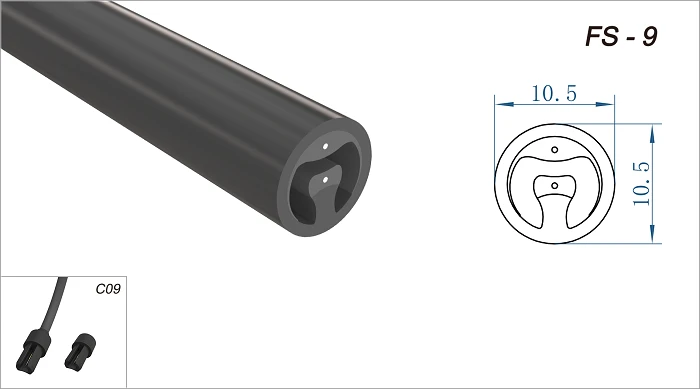

Let's say there's an object that enters the sensor's detection zone. This object will interrupt the normal propagation of the ultrasonic waves. It might absorb some of the waves, reflect them in a different direction, or cause interference. When the sensor's receiver detects these changes in the received ultrasonic waves, it triggers an alarm or a safety mechanism.
This reaction is incredibly fast. The sensor can detect even the slightest disruption in the ultrasonic field in a fraction of a second. This is important because in industrial settings, every millisecond counts. A quick detection can prevent accidents, protect equipment, and most importantly, keep workers safe.
In an ultrasonic environment, there are a few things that can affect the performance of the Narrow Edge Safety Sensor. One of the main factors is the humidity. Humidity can change the speed of sound in the air, which in turn can affect the time it takes for the ultrasonic waves to travel and return. But our sensors are designed to compensate for these environmental changes. They have built - in algorithms that adjust the detection parameters based on the ambient conditions.
Another factor is the presence of other ultrasonic sources. In some industrial environments, there might be multiple ultrasonic devices working at the same time. These other devices can create interference with our Narrow Edge Safety Sensor's ultrasonic signal. To tackle this, the sensor uses a unique frequency - hopping technique. It continuously changes the frequency of the ultrasonic signal it emits, so it can avoid interference from other sources.
Now, let's compare the Narrow Edge Safety Sensor with some of our other products in the safety edge category. We also have the Round Safety Edge, the Mini Sensing Edge, the Safety Edge Sensor, and the Mini Safety Edge Sensor. Each of these sensors has its own unique features and applications.
The Narrow Edge Safety Sensor is great for applications where space is limited. Its narrow design allows it to be installed in tight spaces where other sensors might not fit. On the other hand, the Round Safety Edge is more suitable for applications where a larger detection area is needed. It has a wider detection range and can cover a bigger space.
The Mini Sensing Edge is perfect for small - scale automation applications. It's compact and easy to install, making it a popular choice for hobbyists and small - business owners. The Safety Edge Sensor is a more general - purpose sensor that can be used in a wide variety of applications, while the Mini Safety Edge Sensor is specifically designed for applications where a small form factor is required.
So, why should you choose our Narrow Edge Safety Sensor for your ultrasonic environment? Well, first of all, it's highly reliable. We've put our sensors through rigorous testing to ensure that they can perform consistently in different ultrasonic conditions. Second, it's easy to install. You don't need to be a tech wizard to set it up. Our sensors come with detailed installation instructions, and our support team is always ready to help if you have any questions.
Finally, we offer great value for money. We know that in today's competitive market, cost is an important factor. That's why we've priced our Narrow Edge Safety Sensor competitively without compromising on quality.
If you're in the market for a reliable safety sensor for your ultrasonic environment, don't hesitate to get in touch. Whether you're an industrial manufacturer, a robotics engineer, or a small - business owner, our Narrow Edge Safety Sensor can meet your needs. Reach out to us to discuss your requirements and start the procurement process. We're looking forward to working with you to make your workplace safer!
References:
- Industry - standard literature on ultrasonic sensors
- In - house research and development reports on Narrow Edge Safety Sensors