

Hey there! I'm a supplier of Mini Sensing Edge, and today I'm stoked to chat with you about how to use this awesome product for quality control. Whether you're running a factory, a logistics center, or any operation where quality matters, Mini Sensing Edge can be a game-changer.
Understanding Mini Sensing Edge
First things first, let's get a clear idea of what Mini Sensing Edge is. It's a high - tech safety and sensing solution that comes in a compact size. This little thing packs a big punch when it comes to detecting changes in its environment. It can be used in various setups, from machinery to automated systems, to ensure that everything runs smoothly and safely.
There are different types of Mini Sensing Edge products out there. For example, the Safety Edge Sensor is designed to detect physical contact. When something or someone touches the edge, it immediately sends a signal. This is super useful in situations where there's a risk of collision, like on the edges of moving equipment.
The Mini Safety Edge Sensor is, as the name suggests, a smaller version. It's great for applications where space is limited, but you still need reliable sensing capabilities.
The Anti - collision Safety Edge Sensor is another powerful option. It's engineered to prevent collisions before they happen by continuously monitoring the surroundings and warning the system if there's a potential threat.
Round Safety Edge is designed with a rounded shape, which can be more suitable for certain types of machinery or environments where a round edge is more practical. And the Pressure Sensitive Safety Edge can detect changes in pressure, making it ideal for applications where precise pressure monitoring is required.
Using Mini Sensing Edge for Quality Control
Now, let's dig into how we can use Mini Sensing Edge for quality control.
1. Detecting Defects in Production
In a manufacturing setting, one of the key aspects of quality control is identifying defects early on. Mini Sensing Edge can be installed on conveyor belts or production lines. For instance, if you're producing small parts and there's a defect that causes the part to have an abnormal shape or size, the Mini Sensing Edge can detect it as the part passes by.
The sensors can be set to detect changes in pressure or contact. If a defective part is slightly larger than it should be, it will put more pressure on the edge, triggering the sensor. This immediate detection allows for the defective part to be removed from the production line right away, preventing it from moving further down the line and potentially causing more issues.
2. Ensuring Product Integrity during Packaging
When it comes to packaging, quality control means making sure that the product is properly sealed and protected. Mini Sensing Edge can be used on packaging machinery. The Pressure Sensitive Safety Edge, for example, can be placed around the sealing area.
If the package isn't sealed correctly, there will be a change in pressure. The sensing edge will pick up on this anomaly and alert the system. This way, you can be sure that only properly packaged products leave the facility, which is great for customer satisfaction and brand reputation.
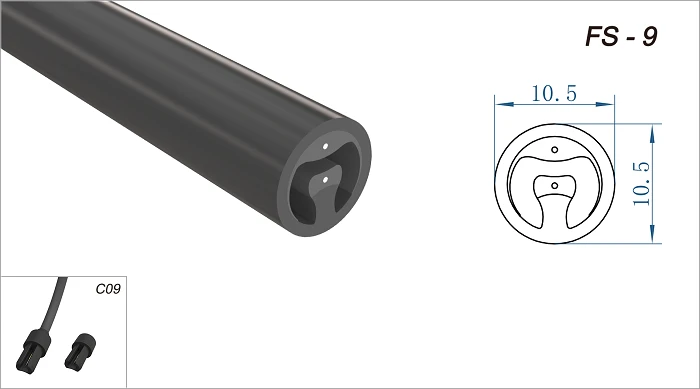

3. Monitoring Equipment Performance
In any production environment, the performance of equipment is crucial for maintaining quality. Mini Sensing Edge can be used to monitor the movement and alignment of machinery parts.
Let's say you have a robotic arm in your factory. If one of the joints of the robotic arm starts to wear out, it might cause the arm to move slightly off - course. The Safety Edge Sensor can be placed along the path where the arm is supposed to move. If the arm comes into contact with the edge when it shouldn't, it indicates a problem with the equipment. This early detection allows for timely maintenance, which helps keep the production process running smoothly and ensures consistent product quality.
Installation and Setup
Installing Mini Sensing Edge isn't too complicated, but there are a few things to keep in mind.
First, you need to choose the right location for the sensors. It should be a place where they can accurately detect the changes you're interested in. For example, if you're using it to detect defects in parts on a conveyor belt, make sure the sensing edge is positioned at a height where it will come into contact with the parts.
Next, you need to calibrate the sensors. This involves setting the sensitivity levels. If the sensitivity is set too high, the sensors might trigger false alarms. On the other hand, if it's set too low, it might miss important changes. You might need to do some trial - and - error to get the calibration just right.
Also, make sure to connect the sensors properly to your control system. Follow the manufacturer's instructions carefully to ensure a reliable connection.
Maintenance and Troubleshooting
To keep your Mini Sensing Edge working at its best, regular maintenance is necessary.
Clean the sensors regularly to prevent dirt and debris from building up. This can affect the sensor's performance. You can use a soft, dry cloth to gently wipe the surface of the sensors.
Check the connections periodically to make sure they're secure. Loose connections can cause intermittent problems or even complete failures.
If you encounter any issues with the sensors, start by checking the power supply. Sometimes, a simple power outage or a blown fuse can be the problem. You can also refer to the user manual for troubleshooting tips. If the problem persists, don't hesitate to reach out for professional support.
Contact Us for Purchase and Collaboration
If you're interested in using Mini Sensing Edge for quality control in your operations, I'd love to chat with you. We can discuss your specific needs, and I can help you choose the right products for your situation. Whether you need just a few sensors or a whole system, we've got you covered.
We're here to support you every step of the way, from installation to after - sales service. So, feel free to get in touch and start the procurement process. Let's work together to improve the quality control in your business!
References
- Manufacturer's user manual for Mini Sensing Edge products
- Industry best practices for quality control using sensing technologies