

Do rubber safety edges have a high coefficient of friction?
Hey there! I'm a supplier of rubber safety edges, and this is a question I get asked a lot. So, let's dig into it and see if rubber safety edges really do have a high coefficient of friction.
First off, let's talk about what the coefficient of friction is. In simple terms, it's a measure of how much two surfaces resist sliding against each other. A high coefficient of friction means that the surfaces grip each other well, and it's harder for them to slide. On the other hand, a low coefficient of friction means the surfaces can slide past each other more easily.
So, do rubber safety edges have a high coefficient of friction? The answer is generally yes, and there are a few good reasons for this.
One of the main reasons is the nature of rubber itself. Rubber is a very flexible and soft material, and it can conform to the shape of the surface it's in contact with. When a rubber safety edge comes into contact with another surface, it can wrap around any small bumps or irregularities on that surface. This increases the contact area between the rubber and the other surface. And as we know from the basic principles of friction, the larger the contact area between two surfaces, the higher the frictional force.
For example, think about the tires on a car. They're made of rubber, and that's because rubber has a high coefficient of friction with the road surface. This allows the tires to grip the road, which is crucial for things like braking and turning safely. A similar principle applies to rubber safety edges. When they're used in various applications, they can grip the surfaces they're in contact with, providing an extra layer of safety.
Another reason for the high coefficient of friction of rubber safety edges is the friction between the rubber molecules. Rubber has a unique molecular structure. The long - chain polymers in rubber can interact with each other and with the molecules of the surface they're touching. These molecular interactions create a "stickiness" that contributes to the high frictional force.
Let's take a look at some of the applications where the high coefficient of friction of rubber safety edges is really useful.
Auto Industrial Equipment
In the auto industry, safety is of utmost importance. That's where Safety Edge for Auto Industrial Equipment comes in. These rubber safety edges are used on various machinery and equipment. Their high coefficient of friction helps to prevent slippage. For example, on conveyor belts in an auto manufacturing plant, rubber safety edges can keep objects firmly in place as they're being transported. If the coefficient of friction was low, items could slide off the conveyor, causing damage or even accidents.
Robots
Robots are becoming more and more common in industrial and service settings. Rubber Sensitive Edge for Robot is designed to enhance the safety of robots. When a robot is moving around, it needs to be able to stop quickly if it comes into contact with an object. The high coefficient of friction of the rubber safety edge on the robot's body allows it to stop more effectively. It can also provide better stability when the robot is picking up and moving objects, reducing the risk of dropping them.
Lifting Platforms
Lifting platforms are used to move people and goods up and down. Rubber Sensing Edge for Lifting Platform is installed on the edges of these platforms. The high - friction rubber ensures that when people or items are on the platform, they don't slide off easily. It also helps the platform make a better connection with the surface it's approaching, like a floor or a loading dock. This is essential for the safe operation of lifting platforms.
Gates
Gates are another area where rubber safety edges are widely used. Rubber Safety Edge for Gates can prevent fingers from getting crushed when the gate closes. The high coefficient of friction means that the gate can close firmly and stay in place. It also helps to reduce noise and vibrations when the gate is opening and closing, by providing a better grip on the frame and minimizing rattling.
Auto Road Barriers
For Rubber Safety Edge for Auto Road Barriers, the high coefficient of friction is crucial. When a vehicle hits a road barrier, the rubber safety edge can absorb some of the impact and also prevent the vehicle from sliding off the barrier. This can reduce the severity of accidents and potentially save lives.
However, it's important to note that the coefficient of friction of rubber safety edges can be affected by several factors.
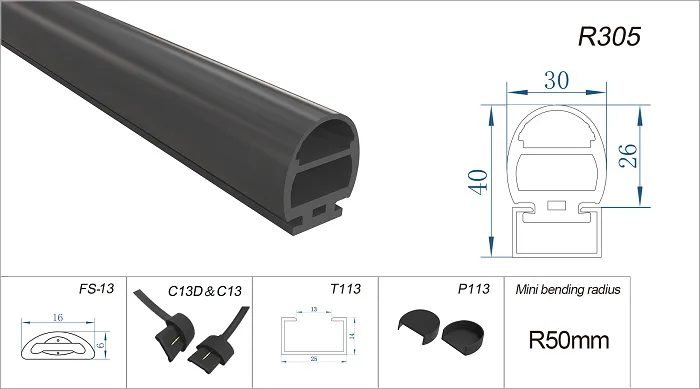
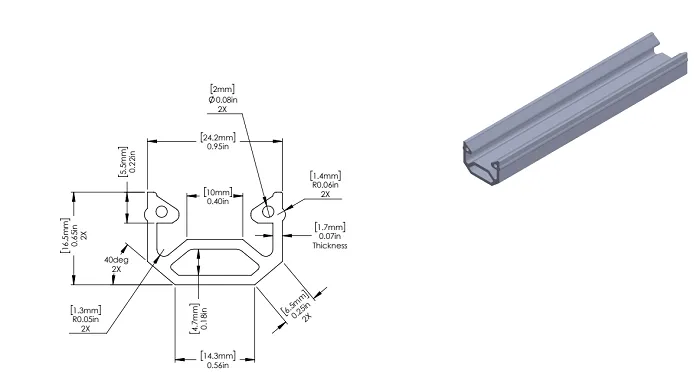
One factor is the surface roughness of the other material. If the surface the rubber is in contact with is very smooth, the coefficient of friction might be lower compared to a rough surface. For example, rubber will grip a rough concrete floor better than a highly polished marble floor.
The temperature also plays a role. At very low temperatures, rubber can become more brittle, and its coefficient of friction might decrease. On the other hand, at very high temperatures, the rubber might soften, which can also change its frictional properties.
The level of wear and tear on the rubber safety edge is another factor. As the edge gets worn over time, its surface might become smoother, and the coefficient of friction can gradually drop. That's why it's important to regularly inspect and replace rubber safety edges when necessary.
So, to sum it up, rubber safety edges generally have a high coefficient of friction, which makes them suitable for a wide range of safety - critical applications. Their ability to grip surfaces well helps to prevent accidents, provide stability, and enhance the overall performance of the equipment or structures they're installed on.
If you're in the market for high - quality rubber safety edges, whether it's for an industrial setting, a public area, or any other application, get in touch with us. We can help you find the perfect rubber safety edge solution that meets your specific needs.
References:
- "Engineering Tribology" by Stachowiak and Batchelor
- "The Physics of Friction" by Bowden and Tabor